

Two Patong condos can charge the same rent, sit on the same street, and feel like different worlds. One has a lift that works, a pool that's clear every morning, corridors that get mopped and a lobby that smells like cleaning spray. The other has a flickering lift light, a green tinge in the pool by Thursday, and a notice board full of arguments. The difference is rarely luck. It's money — specifically, the building's common-area service charge and its sinking fund, and how honestly and competently they're spent.
As a renter you don't pay those fees directly — or at least, you shouldn't. But you live with the results of them every single day. Here is what the money is for, who actually pays it, where a surprising amount of it goes, and how to read a building's finances off its notice board before you sign a lease.
The Two Pots of Money, in Plain English
The service charge (common-area fee) is the monthly or annual charge every unit owner pays, usually calculated per square metre of their unit. It funds the building's running costs: the things that keep a condo a condo instead of a concrete shell. Think of it as the building's household budget.
The sinking fund is the building's savings account. Owners typically pay into it once when they buy (and sometimes in top-ups voted at the annual general meeting). It's held for the big, infrequent expenses that would otherwise arrive as a shock: repainting the whole building, replacing a lift, re-waterproofing the roof, overhauling the pool plant. A healthy sinking fund means those jobs get done when they're needed. An empty one means they get deferred — and deferred maintenance is exactly what you see when a once-smart building starts to slide.
Both pots belong to the owners collectively, managed under the juristic person (the building's legal entity) with a committee of owners overseeing the management company. That structure matters for the next point.

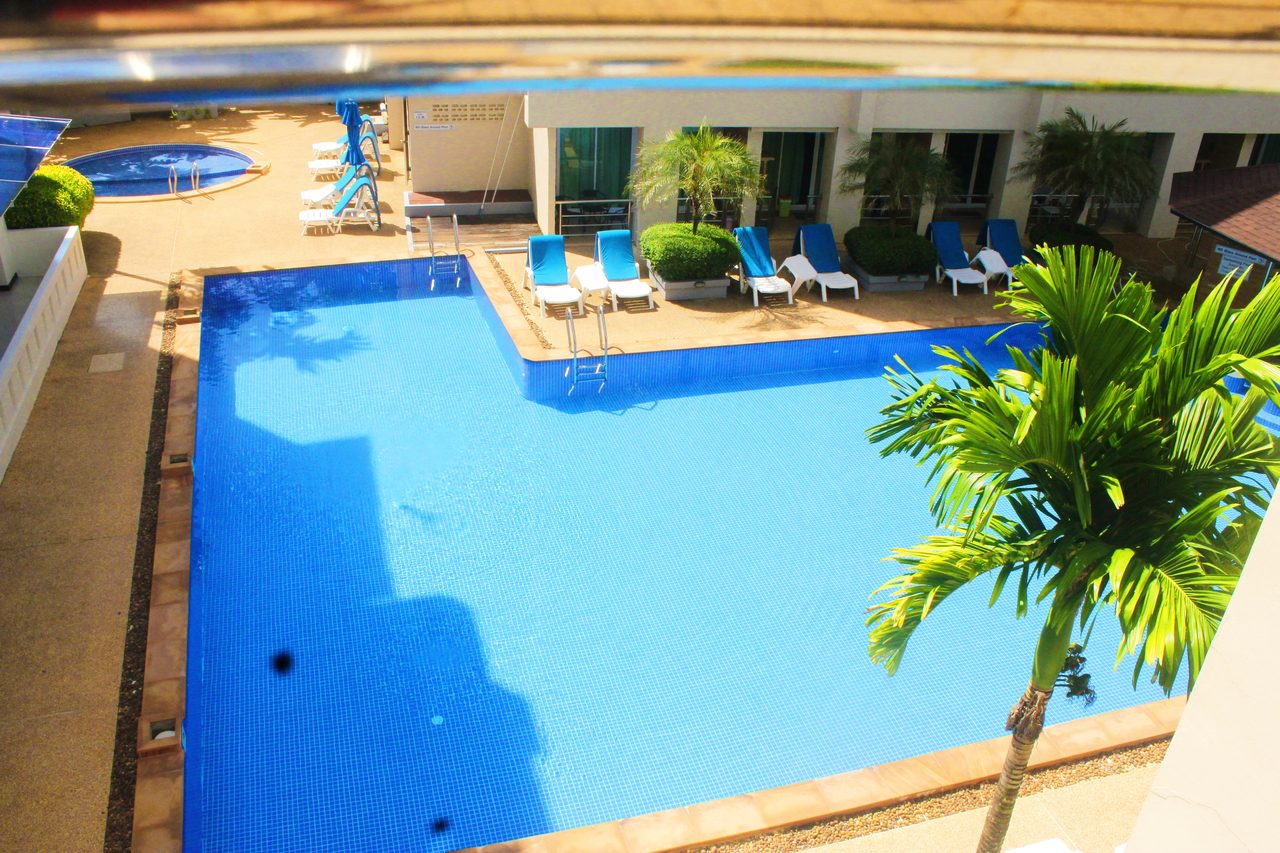
The pool looks effortless. The pumps, chemicals, cleaning and repairs behind it are a serious line in the building budget.
Who Pays — and When a Lease Tries to Pass It On
The service charge and sinking fund are the owner's obligations, full stop. They attach to the unit, not to whoever happens to be sleeping in it. In a normal Patong rental, your rent is your rent: the owner pays the common fees out of it, along with their other ownership costs.
Occasionally, though, a lease tries to hand the tenant the common-fee bill — sometimes openly ("tenant pays the annual common fee"), sometimes buried in a clause about "building charges." Watch for it, especially on annual leases. Paying a metered electric and water bill is normal and fair; paying the owner's service charge is like paying your landlord's mortgage interest — it's a cost of owning, not of renting. If it appears in a draft lease, query it before signing. Reputable owners and managers don't pass it on, and a landlord who tries may be signalling that the unit — or the building — is short of money.
There's a second-order effect worth knowing: when many owners in a building fall behind on their fees, the building's income collapses but its costs don't. That's how services quietly degrade — fewer security hours, less frequent cleaning, pool hours cut. You can't audit the owners, but you can read the building, as we'll come to.
What the Money Actually Covers
A typical building budget spreads across lines like these:
- The security company: the guards at the gate usually aren't the building's own hires — a contracted security company supplies them, and its monthly bill is one of the biggest lines in the budget, paid out of the common pot.
- Cleaning staff salaries: the cleaners who mop the lobby, sweep the corridors, wipe down the pool deck and keep the shared bathrooms usable. When a building looks tired, it's often this line that got cut.
- The police patrol: the local police come around the block once or twice a day and sign the patrol log kept at the building. It's a paid-for arrangement the fees carry — a visible, recorded police presence passing your building every day, on the books.
- Elevator service: the lift maintenance contract and the safety inspections that come with it. Lifts are expensive and unforgiving when neglected, and the service contract is not optional.
- Pool maintenance: its own line, separate from everything else — cleaning, chemicals, water, and upkeep of the pumps and pool plant that keep the water clear.
- Administration: the juristic office itself — the paperwork, the accounting, the billing, the day-to-day running of the building as a legal entity.
- The municipal garbage fee: the tessaban (the municipality) charges the building for trash collection, and that fee comes straight out of the common pot.
- The water system: the pumps, storage tanks and filtration that get water to every floor — plus care of all the water lines and pipes running through the building, not just the plant room.
- The electrical system and transformer: upkeep of the building's electrical system and its transformer, and looking after all the internal power lines and breaker panels. Routine electrical care is a service-charge cost; a transformer repair or replacement is the kind of big bill the sinking fund exists for.
- Painting the building: the periodic full repaint of the building exterior. That's sinking-fund money — the big, predictable, once-in-so-many-years job the fund is saved up for.
- General maintenance: the catch-all — day-to-day repairs and upkeep of the common areas and building systems that don't fall under any specific line above. Something is always wearing out somewhere.
- Trees, plants and landscaping: the grounds themselves — the trees, plants and gardens around the building, kept trimmed, watered and alive out of the common fees. In the tropics, an untended garden becomes a jungle in a single rainy season, so this one never stops.
- Utilities for common areas: corridor and lobby lighting, water for gardens and cleaning, the air-conditioning in shared spaces.
- Insurance and legal: the building's own insurance cover, legal costs and AGM expenses.
- The management fee: what the building pays the management company to run all of the above — see the next section before you assume it all reaches the building.
And then there's the line that never appears on any budget summary, but every experienced owner knows is real: plugging the gaps left by owners who don't pay. A building's utility bills — water and electricity for the common areas, and the shared systems that serve the units — arrive in full every month whether or not every co-owner has paid their share. When some owners fall behind or simply don't pay, the meter doesn't care. The shortfall gets covered out of the fees of the owners who do pay. In plain terms: the paying owners subsidise the non-paying ones, quietly, every single month, and the service charge you hand over is partly a contribution to somebody else's unpaid water and electric. It's one of the least-discussed realities of condo ownership in Thailand, and one more reason a building's collection rate matters as much as its fee level.
Shared facilities are the visible end of the service charge. When the money stops flowing, this is where it shows first.
The Management Fee: Ask Where It Actually Goes
Here is the part nobody puts in the brochure, from hard-won owner experience. The management fee sounds like it buys management of your building — and some of it does. But of every baht owners pay, a big slice — in our experience around half the management fee — is absorbed by the management company itself, in its own cut, overhead and profit, before a single light bulb gets changed in your corridor.
That isn't automatically corruption; management companies are businesses and profit is legitimate. But it reframes the question a good committee (and a curious renter) should ask. Don't just ask how much the management fee is — ask what lands on the building after the company has taken its share: how many staff hours are actually rostered on site, what the cleaning and maintenance contracts really cost, and how the fee compares with what other buildings pay for the same service. Buildings where owners ask those questions tend to get visibly more building for their baht. Buildings where nobody asks tend to pay full price for half a service — and the shortfall shows up, a year or two later, as the tired corridors and deferred repairs in the next section.
Equipment like this needs servicing contracts and eventual replacement — the sinking fund exists so that bill isn't a crisis.
Reading a Building From Its Notice Board
You don't need the full accounts to take a building's temperature. On a viewing, spend two minutes at the juristic office notice board (phone translate apps handle Thai notices well enough for the gist):
- AGM notices and budgets: a building that holds its AGM and posts its budget summary is a building being run in the open. Look for the sinking fund balance being reported, not hidden.
- Arrears warnings: general notices urging owners to pay overdue fees are common everywhere; a board dominated by them, or naming large numbers of units in arrears, suggests strained finances.
- Special levies: a recent or upcoming special assessment for a big repair can be a good sign (the building is fixing things) or a bad one (the sinking fund was empty when the lift died). The notice usually tells you which story it is.
- Maintenance schedules: posted lift-service dates, pool-plant servicing and fire-system checks are the paperwork of a building that maintains on schedule rather than on breakdown.
Viewing-Day Tells of a Well-Run vs Struggling Building
Finally, trust your eyes — the money always becomes visible:
- Lift: clean, quiet, current inspection sticker, no handwritten "out of order" history. One lift permanently down in a two-lift building is a five-alarm tell.
- Corridors and stairwells: mopped floors, working lights, no stored junk or dead plants. Corners are cut here first.
- Pool: clear water mid-afternoon, working showers, furniture intact, a pump room that hums rather than rattles.
- Lobby and entrance: staffed desk, tidy mail area, security who look up when you walk in.
- Gym and shared rooms: machines that work, air-con that runs, a booking system that exists. Neglected shared rooms are a budget obituary.
None of this requires the building to be luxurious — plenty of modest Patong buildings are impeccably run on ordinary fees, because the fees are collected, the management company is kept honest, and the sinking fund is treated as sacred. And plenty of glossy buildings are quietly falling apart behind the marble because none of that is true. As a renter, you're not buying the fees — but you're renting the result of them. Read the notice board, walk the corridors, ask where the management fee actually goes, and you'll know which building you're really moving into.
About Jay & Scott — Jay and Scott are travelers and writers living in Thailand. We enjoy traveling around Thailand — the food, the beaches, the small towns — and writing about it as we go. Back home in Phuket we run Patong Harbor View Condominium, our long-stay condo rentals in Patong — browse the room photos to see what well-kept looks like: phvcondo.com.
-- in Patong
Checking the sky over Patong…
Full Patong forecast →Patong Harbor View condos — pools, mountain-view balconies, walk to the beach. Skip the platform fees and deal with the owner.
See the Condos →Anna, the AI receptionist, answers your calls, books appointments and follows up with your customers — for $395/month.
Meet Anna →Or call (386) 334-2561 and ask for Anna — she answers 24/7.


No comments:
Post a Comment